Pickleball Social League Software
For the weekly night where attendance is never quite final: check people in, rebuild matchups when three subs walk in together, and still give the room a standings link that reflects who actually played, not who replied maybe on Monday.
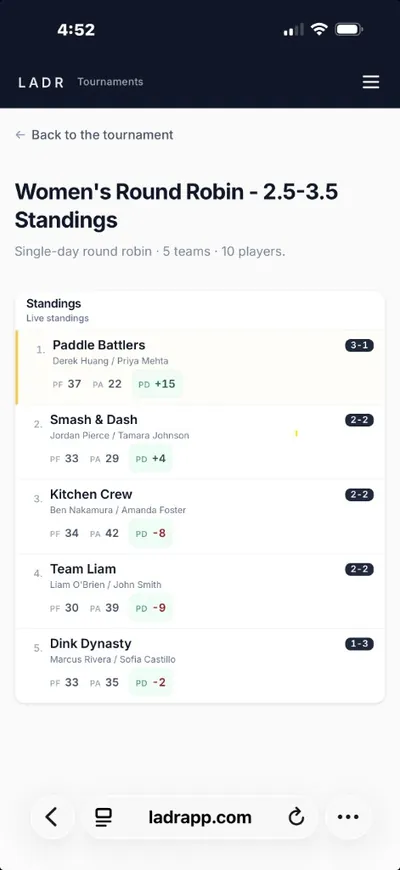
- Check-in friendly nights
- Matchups that survive no-shows
- Standings for who actually played
If you later formalize the same group into a season with archives, graduate the story to recurring league software on LADR. If some weeks lean on placement challenges, borrow rhythms from weekly ladder nights without throwing away your flexible check-in habit.
Why flexible nights still need software
Volunteer burnout here is not fancy features, it is re-explaining who is playing after the room shifts. LADR targets that chaos directly.
- Attendance-first flow: start from who is physically present, then generate matchups instead of the other way around.
- Gentle on newcomers: one browser link beats handing out logins to neighbors who might only come twice a season.
- Transparent standings for tonight: even casual nights need a fair box score; friends should argue about pickle, not about missing names.
- Volunteer time back: fewer side chats that start with “can you text me the pic of the sheet?” at 8:02 p.m.
Free to start · no credit card
Spin up your first social leagueFlexible nights we see in the wild
These are attendance-variable shapes, HOA gyms, church gyms, parks, not the same wording as a flighted house league season.
Park & rec drop-in leagues
City programs where the desk never knows the full list until the first ball bounces, still need fair rotation.
HOA and neighborhood nights
Mixed ages, unpredictable cars in the lot, matchups should flex without embarrassing someone who RSVP’d late.
Club “bring a friend” evenings
Hosts want welcoming chaos, not spreadsheet chaos, guests should see where they play without a club orientation class.
Rotating partner socials
Partners shuffle; the night still needs a standings story that matches what people felt on court.
How a flexible night runs
Check-in truth first, then pickle, repeat every week without inventing a new process because four people swapped.
- 1
Open the night
Reuse the same league night object so returning players know where to look.
- 2
Confirm attendance
Mark who actually showed, even partial courts, before you lock matchups.
- 3
Publish matchups for reality
Generate games from the people in the gym, not from Monday’s optimistic thread.
- 4
Share standings that match the room
Enter scores on phones; friends refresh the same link instead of asking you for a recap text.
FAQ: pickleball social league software
- What is pickleball social league software?
- Software for the night where attendance is the variable: subs, neighbors, last-minute cancels, and still-you-need-standings. It is not the same job as archiving a twelve-week house league division unless you later choose to grow into that.
- How is this different from league software?
- League software leads with season identity and history. Social league software leads with “who is in tonight?” and lets you reshape matchups after check-in without breaking trust with the room.
- Do players need an app?
- No. They follow the night in the browser from the link you share; standings update as you enter games for whoever actually showed.
- Can we still run ladders or pools sometimes?
- Yes, those are format choices inside a flexible night. Use ladder or pool pages when the night is really about movement or pool math; stay here when attendance volatility is the headline.
Run tonight from who actually walked in
Free for weekly club nights. Try one volatile week: check people in, publish matchups after reality hits, and see if neighbors stop DMing you for the official list.